
Chimney Sweep: Repair or Replace? How San Juan Capistrano Homeowners Decide
Most homeowners ask us the same question in a slightly different way: “The sweep said it needs work – do I repair it or replace it?” The short answer is that age alone doesn’t decide it. What decides it is whether the existing structure is dry and stable enough to hold a repair for the long haul. A 1960s brick chimney in San Juan Capistrano and a 1990s prefab unit can need opposite answers even when they look equally worn from the ground.
If you’d rather have someone walk you through your own chimney instead of guessing, call (844) 451-2583. We answer 24/7, with fast dispatch from 7am to 7pm, Sunday through Friday.
Key Takeaways
- Repair makes sense when the brick, mortar, and flue tiles are dry and structurally sound enough to hold the fix.
- Replacement becomes the durable path when water has worked deep into the masonry and repairs keep failing.
- Prefab zero-clearance systems get judged on different criteria than site-built masonry chimneys.
- Repeated partial repairs usually cost more over five to ten years than one correct fix.
- A good contractor will explain the repair with specific material specs, not just a price.
What Makes a Chimney a Repair Candidate Versus a Replacement?
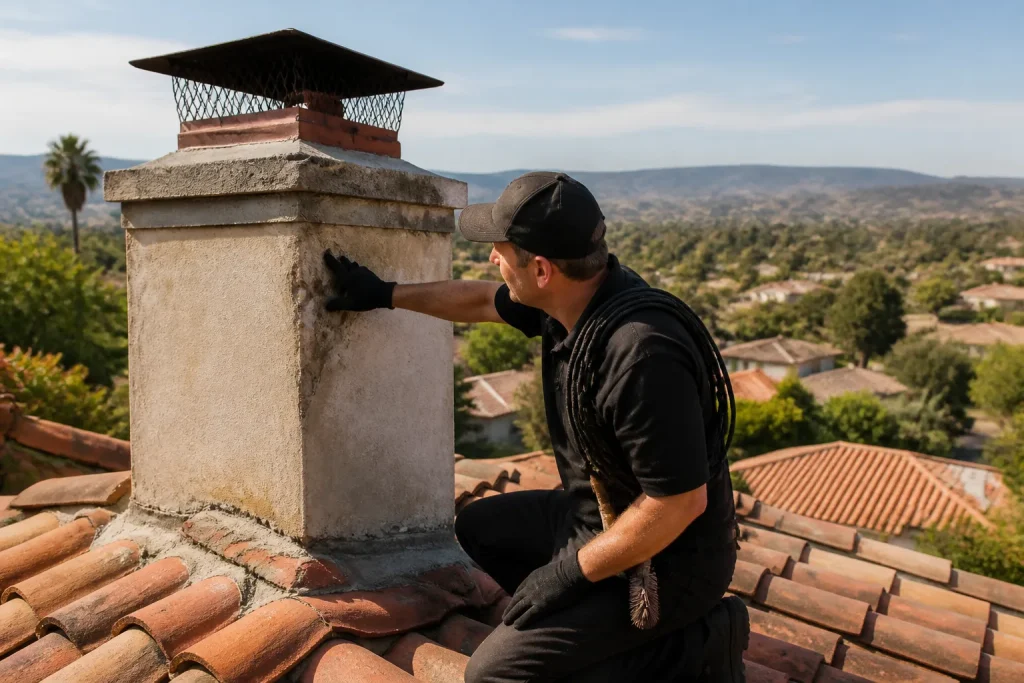
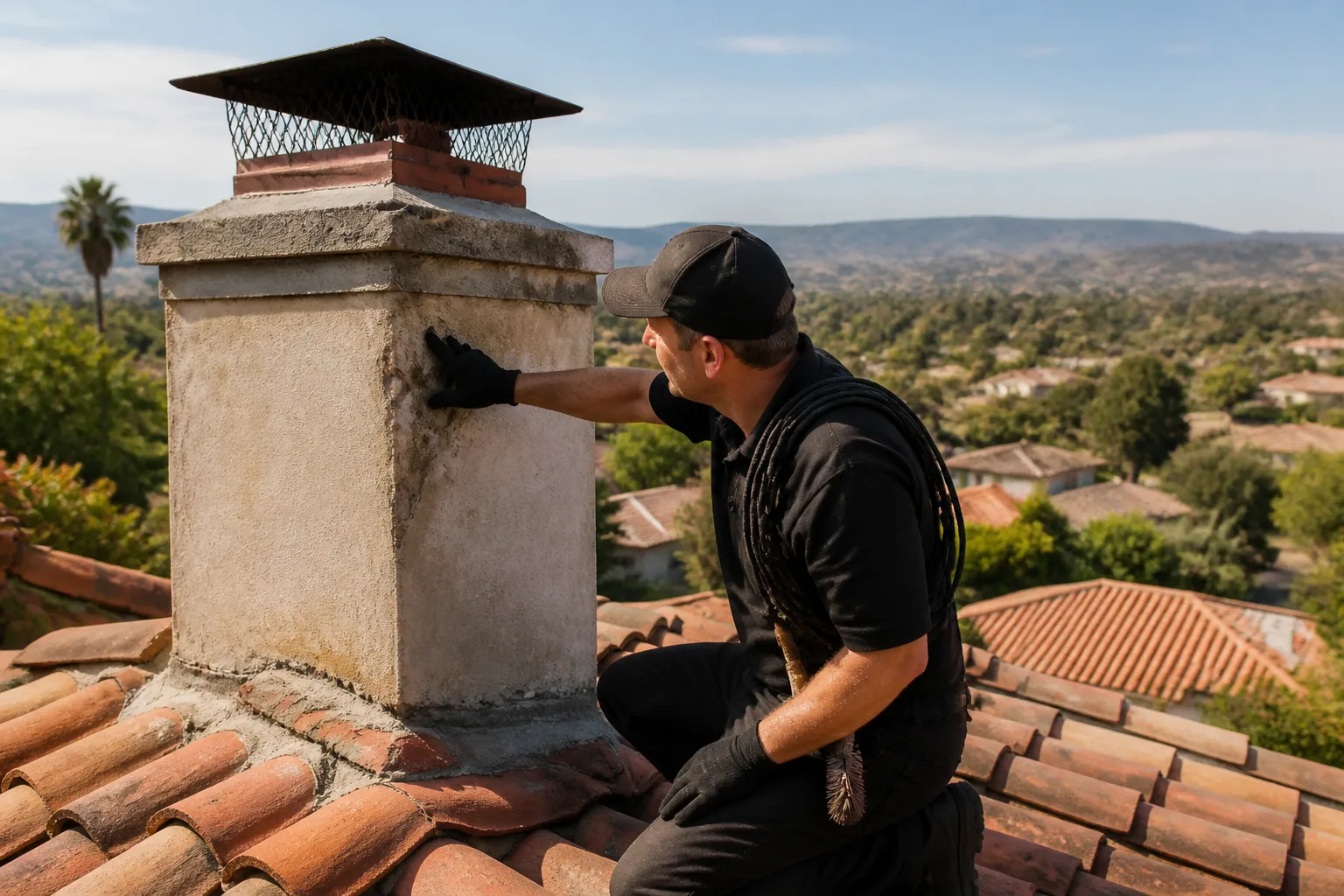
A chimney is a repair candidate when the problem is surface-level and the structure underneath is dry. It’s a replacement candidate when water has penetrated deep enough that repairs won’t hold. That’s the whole calculation, and it’s why we probe mortar joints rather than just look at them. The exterior can look solid while the brick behind the face is soft and absorbing moisture.
Here’s what we check in San Juan Capistrano homes to sort repair from replace:
- Mortar joints: Crumbling at the surface is fixable. Soft, hollow, or damp mortar deeper in means water is already inside the wall.
- Brick condition: Spalling faces that flake and fall away signal absorbed water. Sound, dry brick is worth saving.
- Flue tiles: Cracked tiles can often be resurfaced with a ceramic system. Shattered or displaced tiles usually point toward relining.
- Crown and cap: A failed crown lets water straight into the structure. That’s often the root cause behind everything above.
- Chimney lean or separation: A chimney pulling away from the house is a structural problem, not a cosmetic one.
The distinction matters because a repair done on a wet structure is money spent on a fix that will fail again. When the masonry is sound, a targeted repair is the smart, durable choice. When it isn’t, we say so plainly.
How Do Prefab and Masonry Chimneys Get Judged Differently in San Juan Capistrano?
Prefab zero-clearance fireplaces – common in San Juan Capistrano tract homes built in the 1980s and 1990s – don’t get repaired the same way as a site-built masonry chimney. With prefab, you’re usually working with a metal firebox and a factory-made flue system. There’s no brick to tuckpoint and no mortar to repoint. Instead, the decision comes down to the condition of the flue, the firebox panels, and the joints between sections.
On a prefab system, repair typically means replacing damaged flue sections or installing a listed liner system that fits the appliance, such as a DuraFlex flexible stainless liner rated for wood, gas, and oil. Replacement means the whole assembly is beyond a safe fix. We look for:
- Cracked or warped firebox panels
- Corroded or separated flue sections
- A flue that no longer matches the appliance
- Failed clearances or missing components
A masonry chimney, by contrast, often rewards repair. Cracks in the flue tiles can be resurfaced with HeatShield, a ceramic repair system that restores flue integrity without a full reline. That’s a solution plenty of generalist companies don’t offer, and it can save a masonry chimney from an unnecessary reline. On a prefab unit, that same thinking doesn’t apply – you’re evaluating metal, not clay. The two systems deserve two separate conversations, and San Juan Capistrano homeowners should expect their contractor to know which one they’re looking at.
Why Do Partial Repairs Fail, and How Fast?
Partial repairs fail because they treat the symptom and leave the cause – almost always water entry – in place. Repoint the joints without fixing the crown and the water keeps coming in. Patch the firebox without addressing the flue and the next crack appears somewhere else. The failure timeline is predictable: a repair that ignores water entry typically shows new problems within a few seasons, and sometimes sooner after a wet winter.
Water gets into a chimney in a handful of familiar ways, and each one needs closing off:
- The crown: A cracked crown channels rain straight into the top of the structure.
- The cap: A missing or undersized cap lets water down the flue and invites animals in.
- Mortar joints: Porous or cracked joints soak up moisture like a sponge.
- Flashing: Failed flashing at the roofline lets water track behind the brick.
Chimney caps and crowns built from purpose-made components – we use Gelco and Famco for moisture control and proper draft geometry, not generic hardware-store hardware – close the door on the most common water paths. When a repair skips that step, the next call is usually for the same problem in a different spot. That’s the pattern we try to break, and it’s a big reason partial repairs on a wet chimney tend to repeat.
What’s the Real Cost of Repeated Repairs Versus One Correct Fix?
Repeated repairs usually cost more over five and ten years than one correct fix done properly the first time. A single patch is cheaper than a full rebuild or reline – but three patches over a decade, each followed by a new problem, usually adds up to more than the one job that would have ended the cycle. The math is the part most homeowners never see laid out, so we lay it out.
Model it two ways:
- Repair path: A targeted repair every few seasons, each one treating a fresh symptom, plus the downtime of dealing with it each time. The chimney never gets fully dry, so the problems keep coming.
- Replace path: One full correction – relining with a DuraFlex system, resurfacing with HeatShield, or a rebuild where warranted – then normal upkeep from there.
Over five years, the repair path sometimes looks cheaper on paper. Over ten, it rarely is. The correct fix also restores draft and safety, which is the part a price tag can’t measure. When we recommend the bigger job, we want you to see the trajectory for yourself. And when a repair will genuinely hold, we’ll tell you that too – sometimes work can safely wait, and it should.
How Should You Question a Repair Recommendation?
Ask your contractor to walk you through the recommendation with specific material specs, not just a price. A qualified contractor should welcome the question, because the answer is where the real expertise shows. If someone hesitates or waves off the detail, that tells you something. “Trust me” isn’t a specification.
Here’s what to ask in San Juan Capistrano when a repair is on the table:
- What exactly is failing? Ask them to point to the mortar, the flue tiles, the crown, or the flashing – not just “the chimney.”
- What are you using to fix it? For resurfacing, ask about HeatShield. For relining, ask about DuraFlex. For caps and crowns, ask about the component and why it fits.
- What happens if we do nothing? A good answer tells you honestly whether the work can wait.
- What’s the root cause, and are we fixing it? Water entry should be named and addressed, not skipped.
We name our brands because they matter to your safety, and we’re glad to explain the “why” behind each one. An inspection that actually leads somewhere – where the same team that diagnoses the problem can repair it – means no handoffs and no finger-pointing between contractors. That’s how a repair decision should feel: informed, specific, and yours to make.
When to Call a Pro
If your chimney has cracked flue tiles, a failing crown, or a firebox that’s seen better days, that’s the moment to bring in a trained professional. Some of this work – especially anything involving the flue, structural masonry, or the chase itself – isn’t a homeowner job, and we’d rather you not test that. If you’ve just bought a home in San Juan Capistrano or you’re waking up a long-dormant fireplace, an inspection is the right first step, and it tells you whether you’re facing a repair or a replacement.
Related services in San Juan Capistrano: whether the answer turns out to be a chimney repair or a fresh start with fireplace repair, we handle the diagnosis and the fix, and a routine chimney sweep keeps the system honest between visits. If you’re not sure where to begin, start with our Chimney Sweep San Juan Capistrano overview and we’ll point you the right way.
The Bottom Line
Repair or replace comes down to whether your chimney is dry and structurally sound enough to hold a fix – not how old it is. Masonry and prefab systems get judged differently, partial repairs that skip the root cause tend to fail on a predictable timeline, and one correct fix usually beats a string of patches over ten years. Ask for the specifics, and expect a straight answer. Our technicians have up to 11 years of experience, and we’re happy to show our work.
If you’re in San Juan Capistrano and need help deciding, Chimney Sweep San Juan Capistrano offers free estimates – call (844) 451-2583. We answer 24/7, with fast dispatch from 7am to 7pm, Sunday through Friday. Nothing gets recommended without evidence you can see for yourself, and the written estimate sets the final price.
Frequently Asked Questions
A chimney with cracked flue tiles, a failed crown, or water-damaged masonry should be addressed, because those conditions affect both safety and how long the structure lasts. A chimney that’s dry and sound can usually wait for routine upkeep. Call (844) 451-2583 for an honest assessment – estimates are free.
Most wood-burning chimneys benefit from a sweep and inspection once a year, or sooner if you burn heavily. Gas fireplaces still deserve a periodic look even though they produce less creosote. Call (844) 451-2583 to book a sweep and we’ll tell you what your system actually needs.
Often, yes. When the flue tiles are cracked but the structure is sound, a ceramic resurfacing system like HeatShield can restore flue integrity without full relining. When tiles are shattered or displaced, relining with a DuraFlex system is usually the durable answer. Call (844) 451-2583 and we’ll walk you through which applies to your chimney.
A prefab system is a repair candidate when the flue and firebox panels are intact and a listed liner can bring it up to spec; it’s a replacement candidate when panels are cracked or the assembly is compromised. In San Juan Capistrano, prefab units are common in tract homes, and they’re judged on metal and factory components rather than brick and mortar. Call (844) 451-2583 for a free estimate and a clear recommendation.
Written by the team at Chimney Sweep San Juan Capistrano.
Need Chimney Cleaning Help?
Call Chimney Sweep San Juan Capistrano - the local pro we connect you with is licensed and insured, here with fast help in San Juan Capistrano.
(844) 451-2583